
The Goal: Create a direct, safe connection for active transportation to and from Catonsville and downtown Baltimore, and all the communities, businesses, parks, and other places in between.
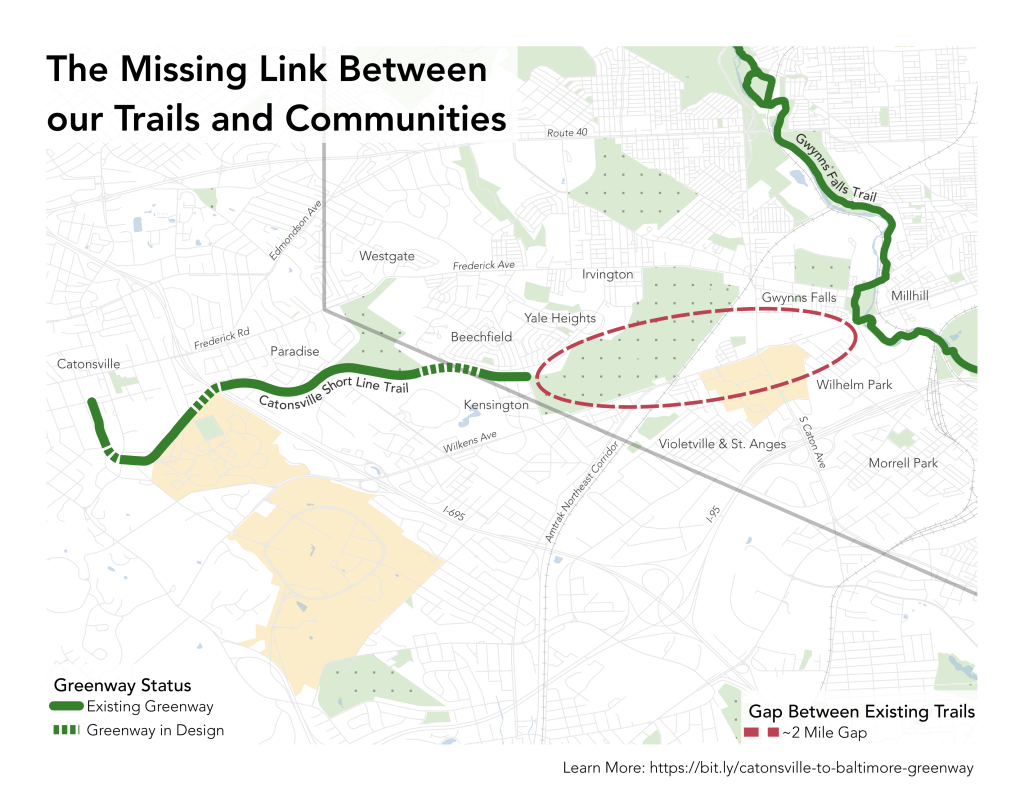
With the planned Catonsville Short Line Trail and existing Gwynns Falls Trail, all that is needed to complete this Greenway is ~2 miles of new multi-use paths to create a ~9 mile Greenway from downtown Catonsville to the Inner Harbor as shown in the map below.
Baltimore Rec and Park’s previous master plans for our city trail system has included this stretch of trail in various ways as indicated by the following maps.
The Baltimore Trail System map shows a plan to run the Catonsville Short Line trail through Loudon Park Cemetery connecting directly to Frederick Ave.
The Proposed Bicycle Routes and Facility Types map indicates plans to continue this trail through the neighborhood of Gwynns Falls along the historic rail right-of-way to eventually connect with the existing Gwynns Falls Trail.
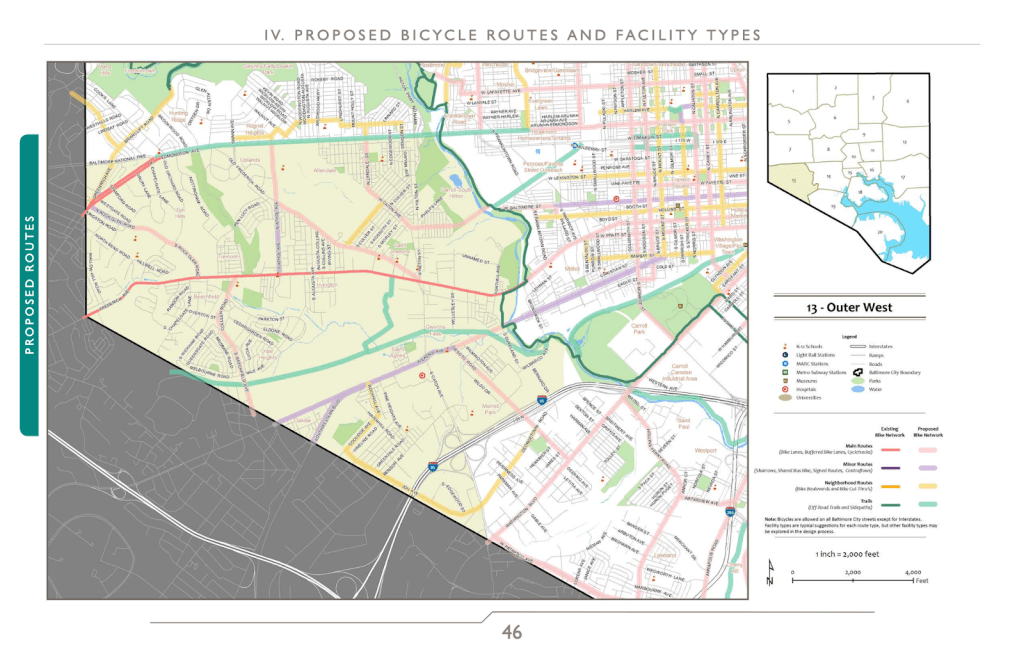
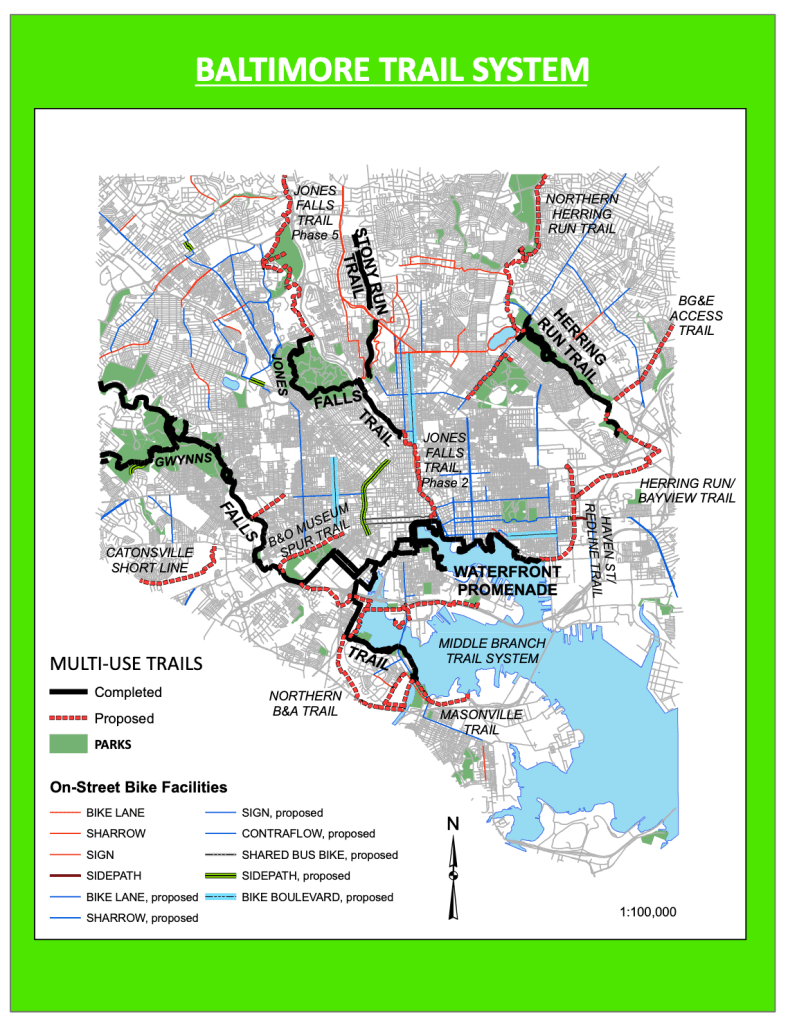
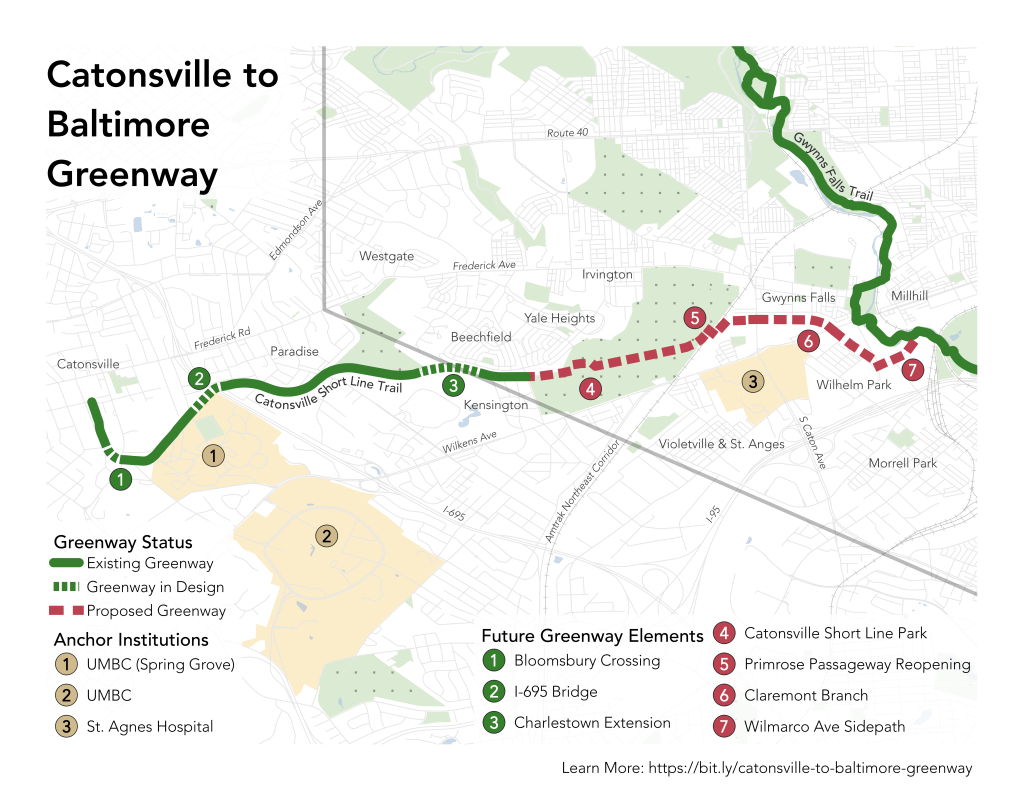
Both maps indicate some previous drive within Baltimore City planning to place a trail along this route. The proposed route can be broken up into a couple of different logistical hurdles; the Loudon Park Cemetary (4), the Primrose Passageway (5), and the Claremont Branch (6).
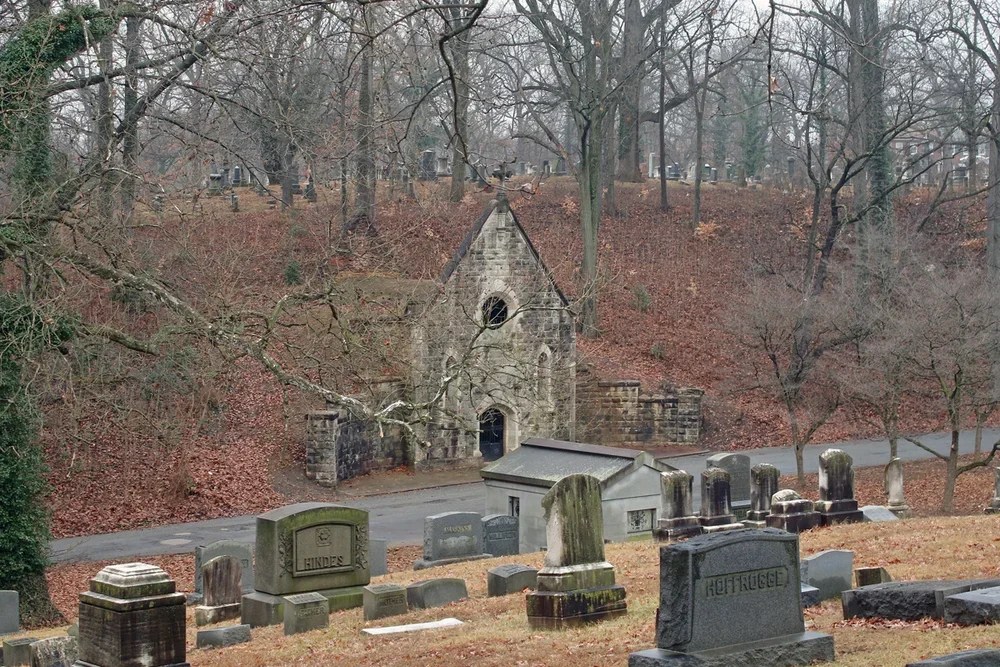
The Loudon Park Cemetery
This is an approximately 1 mile stretch of the proposed trail within the Baltimore City owned original railroad right-of-way. The proposed trail would enter the park at S Beechfield Ave and exit through the Primrose Passage.
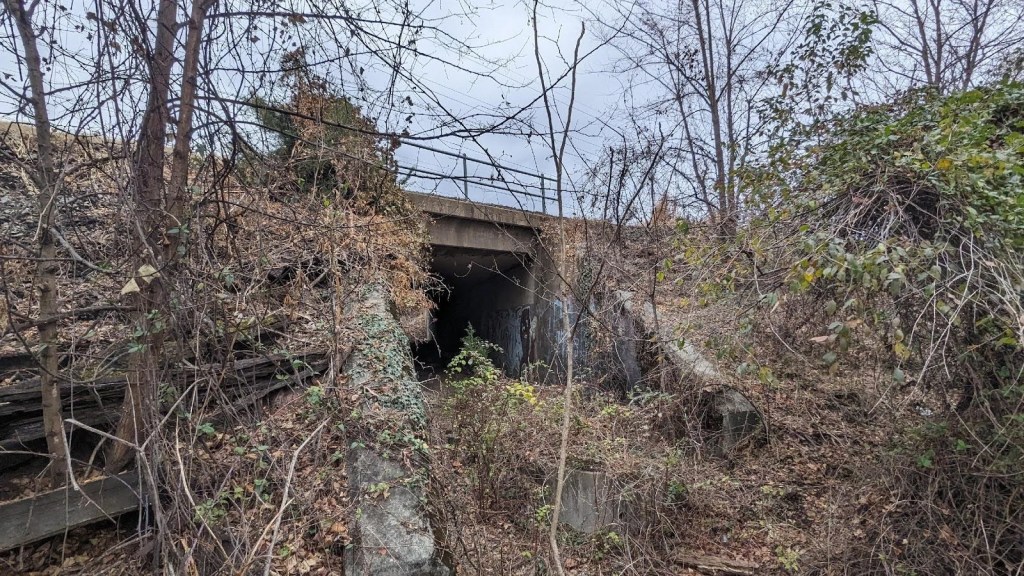
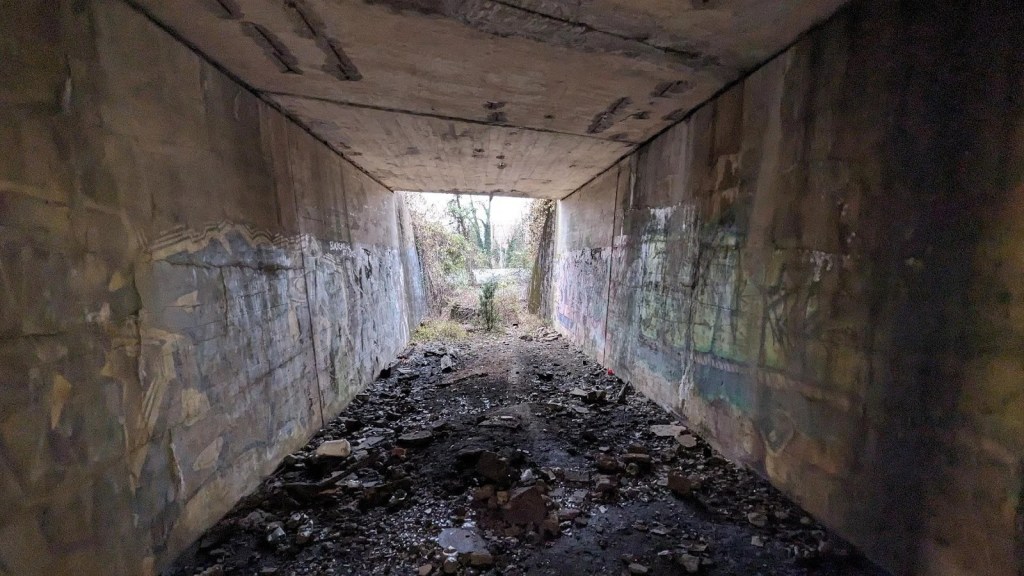
The Primrose Passage
This is an approximately 1 mile stretch of the proposed trail within the Baltimore City owned original railroad right-of-way. The proposed trail would enter the park at S Beechfield Ave and exit through the Primrose Passage.
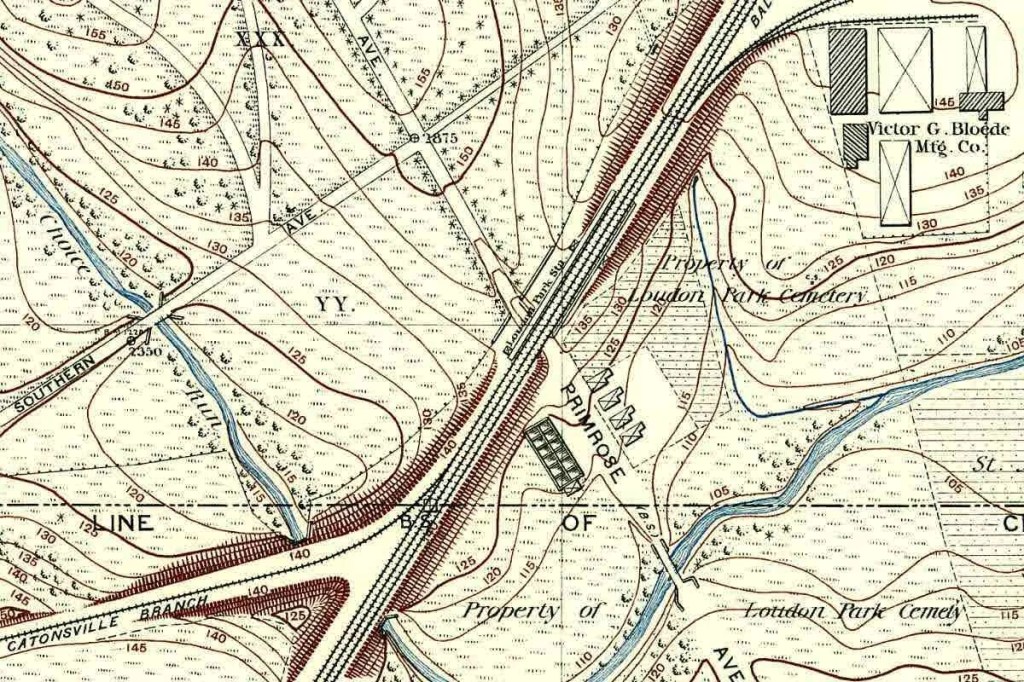
The Claremont Branch
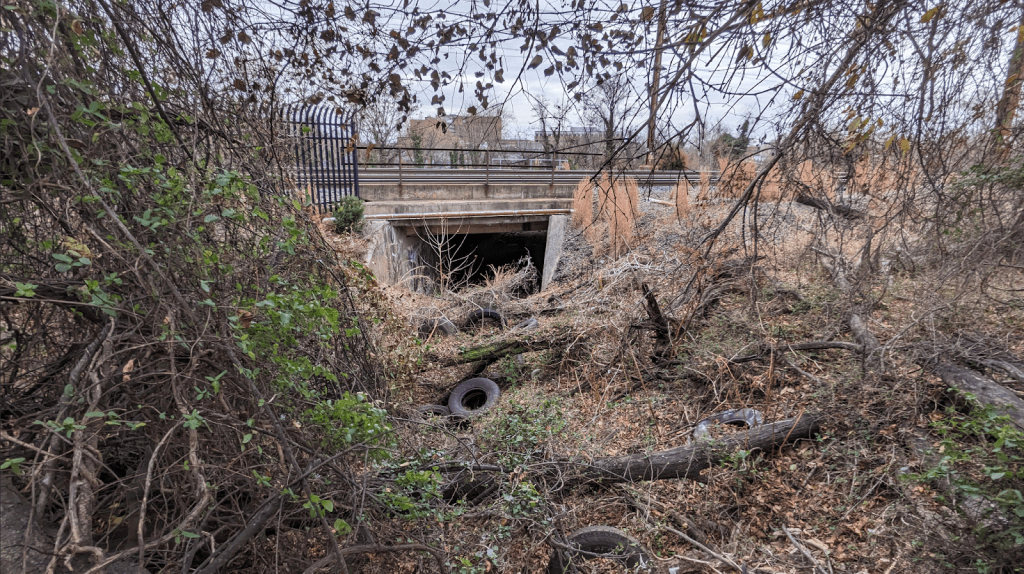
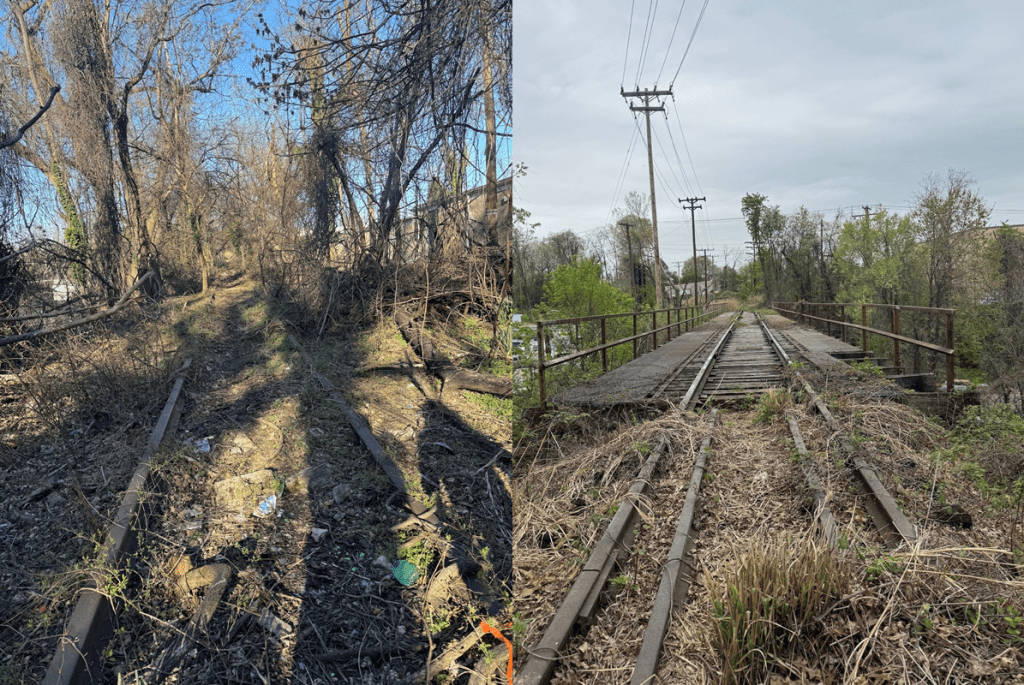
The Claremont Branch is a short railroad spur (1.2 miles) off the NEC owned by Norfolk Southern that connects to the Mt. Clare Railroad Yard.
The spur starts approximately 500 ft north of the Primrose passageway and includes bridge crossings over S Caton Ave and Wilkens Ave.
While the railroad is not officially “abandoned,” it has not been used in decades and would require significant investment to restore to rail use.
Rail corridors like this are great for conversion into all-ages trails because of their generally minimal slope and separation from roads.
 Catonsville to Baltimore Greenway